The dangers behind the “base burn”
Key takeaways:
- A harmful internet trend called the “base burn” falsely claims that a preliminary sunburn will develop into a tan that shields you from later skin damage.
- UV exposure always causes harm, and that exposure leaves deeper skin layers more vulnerable to ongoing damage every time you go back into the sun.
- 日焼け止め and protective clothing are the best way to protect your skin from UV radiation if you are outdoors, and seek shade whenever possible if the UV index is high.
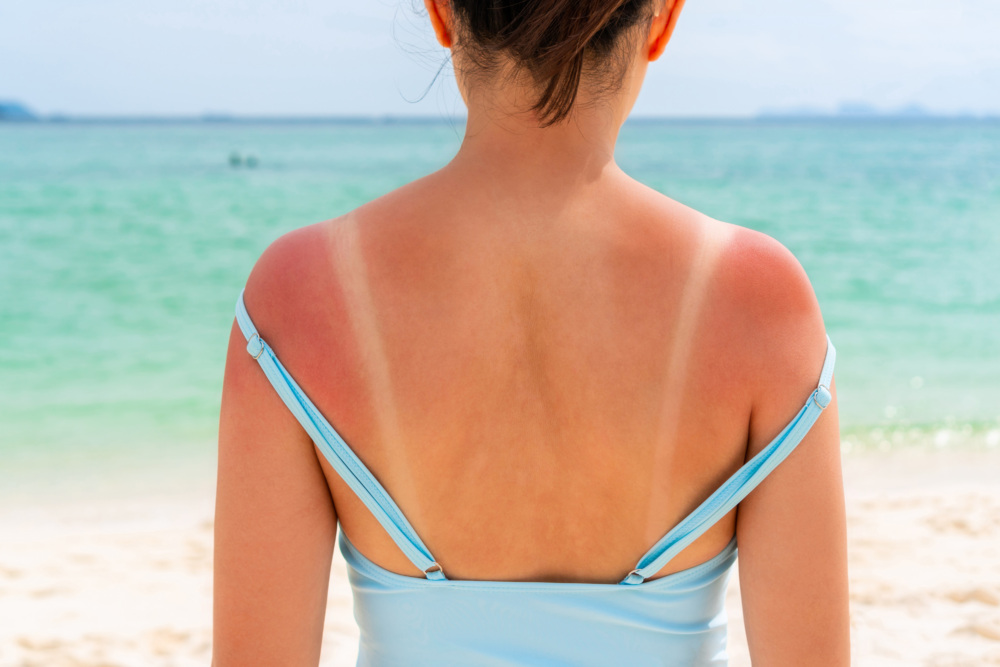
A harmful trend has spread across social media and the internet: the “base burn.” The concept (sometimes also known as a “base tan”) falsely claims that a preliminary sunburn will develop into a tan that shields you from later skin damage. In reality, this mindset encourages exactly the kind of UV exposure that increases your 皮膚ガン risk. Here are the skin cancer dangers behind the base burn.
How UV damage actually works
Sunlight has two main types of ultraviolet (UV) radiation: UVA and UVB. Both are harmful when it hits your skin, just in different ways.
UVA rays penetrate more deeply in the skin, breaking down collagen そして elastin and leading to long-term skin damage, accelerated aging, wrinkles and brown spots.
UVB rays are what causes the classic red, painful sunburn. They damage the DNA in the top layers of your skin almost immediately, triggering inflammation as your body tries to repair the injury.
READ MORE: What a dermatologist wants you to know about skin cancer
Both types of UV radiation are dangerous because your skin has no way to “get used to” this damage. There’s no training effect, tolerance building or protective benefit from an early burn. UV exposure always causes harm—whether you burn, tan or feel nothing at all. And because UVA and UVB rays work together, that exposure leaves deeper skin layers more vulnerable to ongoing damage every time you go back into the sun.
Tans and sunburns are harmful—not protective
When your skin is exposed to UV radiation, your body attempts to defend itself. Melanin—the pigment that gives skin its color—darkens in response to UV exposure. That darker melanin is what a tan is. But a tan is not a protective layer—it’s actually a warning sign. Tans form only after DNA damage has already occurred, meaning your skin is trying to minimize any further harm. It does not mean you have a protective shield on your skin.
If you have natural melanin, meaning you we’re born with a darker skin tone, it can protect your DNA continuously. But it is still important to wear sunscreen no matter how dark your skin is.
RELATED: Understanding skin cancer in darker tones
The problem is that your skin’s repair system isn’t perfect. Every burn, tan or unprotected exposure leaves behind damage in your DNA. Over time, that damage accumulates, increasing the risk of skin cancers. So, every time you’re exposed to UV radiation, your skin damage increases.
How to protect your skin
Maybe you’ve already had your first burn of the season (it happens), but what you do next can impact your skin cancer risk. You should still take every step you can to protect your skin moving forward, because additional UV exposure only adds more damage on top of what’s already there.
READ ALSO: 皮膚がんのABCDE
日焼け止め and protective clothing are the best way to protect your skin from UV radiation if you are outdoors, and seek shade whenever possible if the UV index is high. Protective clothing can look like long shirts or pants, hats to cover your face, sunglasses to protect your eyes (and the skin around them) or a scarf/bandana to protect your neck. When buying sunscreen, make sure to choose broad‑spectrum with SPF 30 or higher to block both UVA and UVB rays.
READ MORE: Should you wear sunscreen when driving?
Protect your skin, in every season, and learn more about ways you can stay ahead of skin cancer.