How to build habits that can help your family prevent cancer
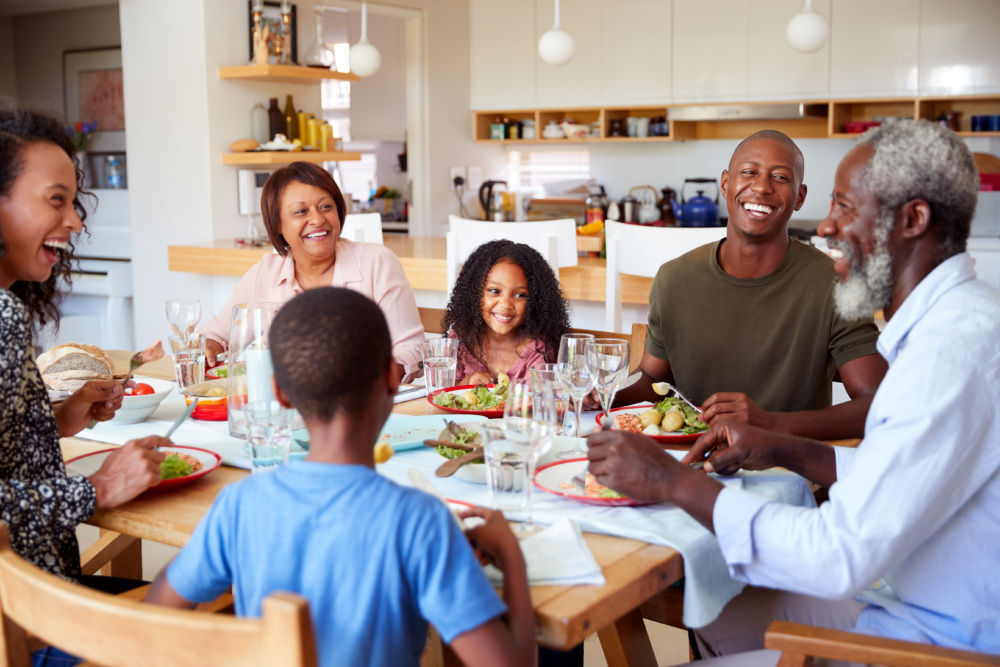
Parenting is not for the faint of heart! In the daily chaos of mediating sibling squabbles, helping with homework and juggling everyone’s schedules, it can leave little time to think about new healthy habits or routines for your crew. But childhood is the best time to start building healthy habits that your kids can keep up throughout their lives to give them the best chance of a healthy future.
Our recommendation? Keep it simple. Here are five ways you can support a healthy lifestyle as a family, that won’t add to the mental load.
Take a seat during meals.
Sitting down for dinner every night may not be possible—sometimes, a PB&J in the car on the way to practice is the best we can do! But when you are sitting down for a meal as a family, make sure everyone actually sits at the table together. It looks different for every family, but that may mean:
- Waiting until everyone is seated to begin eating (so you’re present and experiencing the meal together).
- Encouraging everyone to sit and talk, even if your picky eater will only take two bites.
- Resisting the urge to grab bites at the counter while you get a head start on cleanup.
If your little ones struggle at the table, try putting on some soft music or playing simple games while you eat, like seeing how many rhyming words you can come up with.
Sitting down together for your meal can encourage mindful eating for everyone, which is a great foundation for a balanced diet and healthy weight throughout your life to reduce your cancer risk. It also enables more family connection, which is great for everyone’s mental well-being!
READ ALSO | What is a plant-based diet and can it help prevent cancer?
Model sun safety—and other healthy habits.
Protecting your skin from the sun will be a natural habit for your kids if you start early, kind of like brushing their teeth each day. Before you head outside, make sure everyone is covered in SPF or protective clothing—and that includes you. Modeling sun safety will show your kids it’s important for EVERYONE, and not just something you’re forcing THEM to do.
Skin cancer is one of the most common cancer diagnoses, but it’s also one of the most preventable. Regardless of skin tone, make sure you and yours are staying covered to stay ahead of cancer.
Modeling healthy behavior goes beyond protecting your skin. How else are you setting a good example? Talk to your kids about your routine healthy habits, like going to the doctor for a checkup (not just when sick!), exercising, or getting enough sleep.
Encourage daily exercise.
Little ones can grow stronger and increase their physical activity by participating in everyday tasks. You can encourage them by letting them do daily tasks on their own, without jumping in to assist (even if that means it will take a little longer to get something done). This can look like:
- Letting them carry the big bag of groceries, even if they’re struggling. (Just check they don’t have the eggs!)
- Walking to the bus stop or to school together, even when it’s raining. An umbrella will do the trick!
- Riding their bike to a friend’s house, even if it’s a little farther than they’ve gone before.
Physical activity is linked to a lower risk of several cancers, and it’s recommended you get at least 30 minutes of physical activity at least five days a week to reduce your cancer risk. But that doesn’t have to mean 30 minutes at the gym—it can simply mean moving more together throughout your daily life.
READ ALSO | How sleep and fitness affect your health
Drop the pet names for body parts.
As a parent, you can normalize talking about bodies and asking health-related questions from a young age—and this can head off some of the hesitancy, embarrassment or shame people may feel later in life that can keep them from going to the doctor. In fact, of the 73% of U.S. adults who worry when thinking about cancer screenings, 25% say they worry they will experience feelings of awkwardness—that’s a real barrier that keeps people from the health care they need.
Start by using the proper terms for body parts, including genitals. Calling body parts by incorrect or made-up names (e.g. calling the vulva a “foo foo”) can imply there’s something embarrassing about it—which can keep your kids from seeking help down the road. Accurate, matter-of-fact conversations about bodies and body parts will serve them well throughout their lives.
Teach self-advocacy.
Learning how to speak up for yourself is a skill you can build with your little ones in small, everyday moments:
- When your child gets a bad grade, encourage them to talk with their teacher to figure out what went wrong (and be there to support them if they need).
- If you receive a product that’s damaged or defective, call customer service to politely request a replacement—in front of your kids.
- Let your kids order for themselves at restaurants as soon as they’re talking, so they can get used to asking for what they need. If your kids are older, it’s never too late to start this!
When it comes to health care, being able to advocate for yourself is an essential skill. You may need to push back on a provider’s recommendation, insist on further screenings or diagnostic checks, or seek a second (or third!) opinion. Being able to advocate for yourself, or for your loved ones, can help you get the care you need.
Healthy habits don’t have to feel like another item to check off your to-do list. With some small adjustments, you can set your loved ones up for a healthy, cancer-free life—family style.