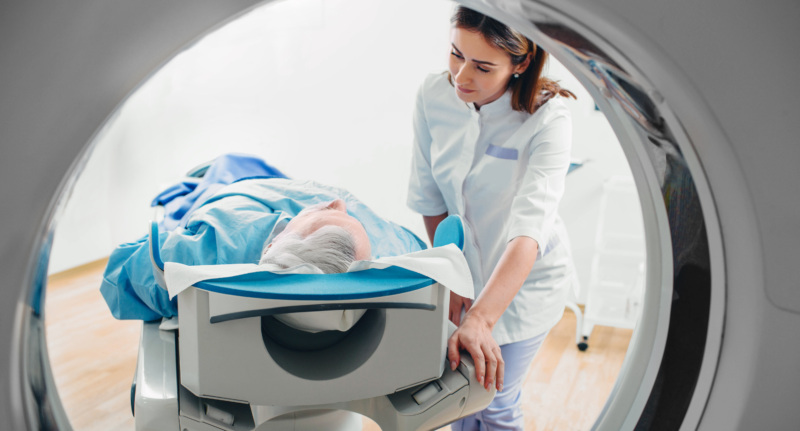
Lung Cancer

What is it?

Lung cancer is cancer that begins in the lung (almost all people are born with two lungs). Anyone can get lung cancer, but some factors increase your risk. About 80%-90% of lung cancer deaths are related to cigarette smoking.

Screening people who have a long history of smoking cigarettes significantly reduces lung cancer deaths, but despite being a non-invasive and quick procedure, current rates in the U.S. are just over 18% for those eligible*—the lowest of any routine cancer screening.

Early Detection = Better Outcomes®, so it’s important to get screened, reduce your risk, and talk with your health care provider about your health history.

*Source: American Lung Association

Three senior women smiling in an outdoor pool. All three are resting their arms on the pool ledge and have goggles resting on the top of their heads.

Get screened

If you smoke cigarettes or used to smoke cigarettes, follow these screening guidelines.*

*Source: American Cancer Society

Ages 50–80: Low-dose CT scan

People who smoke cigarettes or used to smoke cigarettes may qualify for screening with a low-dose CT scan, an easy and painless screening procedure. Screening is recommended for those who have at least 20 pack-year histories of smoking cigarettes.

Low-dose CT scans are fast (taking less than a minute) and utilize up to 90% less radiation than traditional CT scans.

What’s a pack-year history?

A “pack-year history” is an estimate of how much a person has smoked over time. Multiply the number of packs of cigarettes smoked every day by the number of years smoking that amount.

One pack a day for 20 years is equal to 20 pack years. Two packs a day for 10 years also equals 20 pack years. Learn more about how pack years factor into your health.

Insurance coverage

Under federal law, private insurers and Medicaid are required to cover services that have an “A” or “B” grade by the U.S. Preventive Services Task Force (USPSTF). Some insurers may choose to cover services for additional groups. Medicare coverage for preventive services is limited to tests for which Congress has explicitely authorized coverage.

Guidelines from the USPSTF recommend lung cancer screening for people ages 50-80 with 20 pack-year histories, who currently smoke cigarettes or who have quit within the past 15 years. American Cancer Society guidelines say it doesn’t matter when you quit.

Always check with your insurance provider to find out if you’ll be covered for routine lung cancer screening.

Other types of smoking

Eligibility for lung cancer screening is based on cigarette smoking. If you have a long history of smoking something else, such as cigars, talk with your health care provider about lung cancer screening. If screening is recommended for you, you may want to check with your insurance provider to see if it will be covered.

Find a lung cancer screening near you

Screening is recommended based on age and cigarette smoking history. Use this tool to find a lung cancer screening location near you today.

Get started

Know your risk

You are at increased risk for lung cancer if you:

  • Smoke or have a history of smoking—even if you quit a long time ago.
  • Have had heavy exposure to secondhand smoke.
  • Were exposed to indoor or outdoor air pollution.
  • Have had a job with exposure to radiation.
  • Were exposed to certain toxic substances, such as arsenic, radon or asbestos.
  • Have a personal or family history of lung cancer.

Reduce your risk

You may reduce your risk for lung cancer through these lifestyle-related modifications:

Icon illustration of a cigarette with smoke coming from its tip and a large X over it indicating no smoking.

Avoid all forms of tobacco.

Icon illustration of a magnifying glass.

If you smoke cigarettes or used to, get screened for lung cancer based on guidelines and your personal risk factors.

Icon illustration of an adult head breathing in smoke from someone else's cigarette with a large X over the situation. It is indicating not to breathe in second-hand smoke.

Stay away from secondhand smoke.

An icon illustration of an apple and a carrot.

Eat lots of fruits and vegetables.

The antioxidants in fruits and vegetables can help prevent DNA damage, and the phytochemicals and fiber have properties that can stop or slow the growth of cancer cells.

Icon illustration of a bottle of vitamins.

Consult with your health care provider before taking any supplements.

Beta-carotene, lutein, vitamin A, and vitamin B6 and B12 supplements may increase the risk of lung cancer.

Icon illustration of a house.

Make your home and community smoke-free.

Icon illustration of a radon detector.

Test your home for radon.

Signs & symptoms

There are usually no symptoms in the early stages of lung cancer. Talk with your health care provider right away if you have any of these symptoms, even if you have none of the risk factors listed:

  • A cough that does not go away or worsens
  • Coughing up blood
  • Constant or intermittent and unexplained chest pain
  • Repeated pneumonia or bronchitis
  • Weight loss and loss of appetite
  • Hoarseness lasting a long time
  • Wheezing or shortness of breath
  • Feeling very tired all the time

Treatment options

Treatment depends on the type of tumor cells (small cell or non-small cell), the stage of the cancer, the presence or absence of certain proteins or genetic mutations, and your medical condition.

Surgery

In early stages of lung cancer, when the disease has not spread outside the lungs, surgery is the usual treatment. The most common type of surgery for early-stage lung cancer is lobectomy (removal of one lobe of the lung). A pneumonectomy (removal of the entire lung) could be done for cancer that has spread throughout the lung.

Chemotherapy

Chemotherapy uses drugs to kill cancer cells. It may be used alone or in combination with another therapy before or after surgery.

Radiation therapy

This treatment uses high doses of radiation to kill cancer cells and shrink tumors. It may be used alone or in combination with another therapy before or after surgery.

Immunotherapy

This type of cancer treatment stimulates your immune system to better respond to the cancer to detect and destroy abnormal cells. It may be used alone or in combination with another therapy before or after surgery.

Targeted therapy

Patients with certain tumor characteristics or genetic mutations may be eligible for targeted therapy. Targeted therapy can be a drug or antibody that targets the proteins or genetic mutations that affect how cancer cells grow, divide and spread. It may be used alone or in combination before or after surgery.

The Latest

See More