Cost concerns now rival fear of cancer diagnosis, new survey finds

即时发布
凯拉·梅斯特
703-836-1746
kyra.meister@preventcancer.org
Alexandria, Va. – “You have cancer.” The three words no one wants to hear. Routine cancer screenings can help prevent cancer or catch it early, when treatment is more likely to be successful. But new data show that something is keeping people from getting screened—and it’s not just fear of hearing those three words.
Findings from the Prevent Cancer Foundation’s 2026 Early Detection Survey reveal that concern about unexpected costs of getting routine cancer screenings now rivals the fear of getting diagnosed with cancer. More than one in three U.S. adults (34%) who worry when thinking about routine cancer screening say they are concerned about the cost, up from 25% in 2025. This matches the percentage of people who say their worries are about finding out they have cancer.
Seventy-three percent of U.S. adults reported being behind on one or more of their routine cancer screenings, an increase of 4% from 2025. This growing backlog of missed screenings reflects how concerns about affordability are translating into delayed or skipped screenings: Cost was one of the top three reasons cited by participants for missing their screenings (35%). This reason falls just behind not knowing they needed to be screened (42%) and not having a family history of the disease (36%). (It’s a common misconception that only people with a family history of cancer need to get screened.)
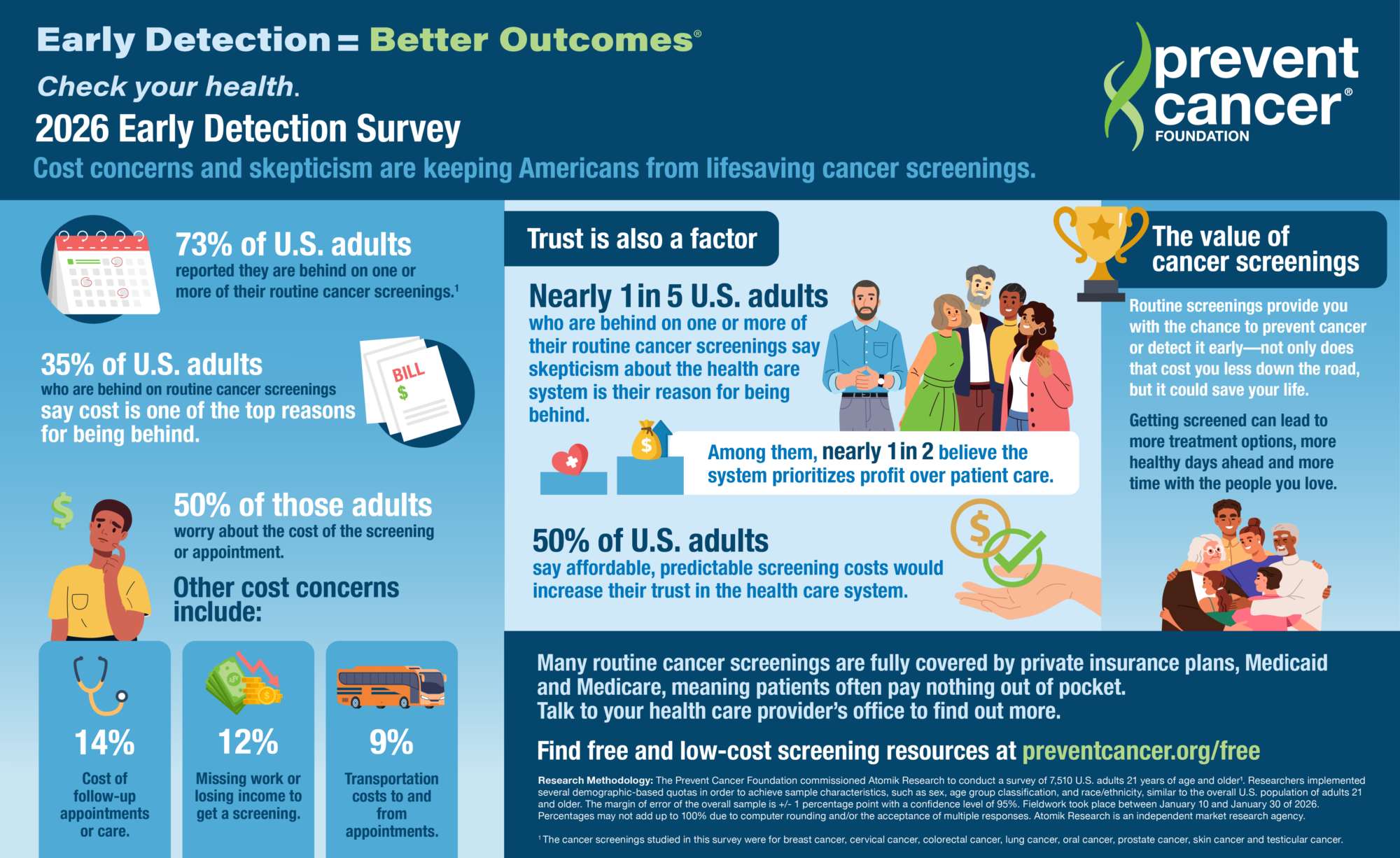
Concerns about cost may in fact be driven by confusion about the patient’s financial responsibility for these cancer screenings. Of respondents who named cost as the reason for being behind on screening, one in two (50%) said they were worried about the cost of the screening or appointment itself. Other cost concerns included the cost of follow-up appointments or care (14%) and the loss of income or missing a shift to get screened (12%).
Many routine cancer screenings are fully covered by private insurance plans, Medicaid and Medicare, meaning patients often pay nothing out of pocket. This suggests a lack of clear, consistent information about coverage is fueling unnecessary fear, causing people to delay or skip screenings and miss the opportunity for better health outcomes.
Findings also show that confusion about routine screening costs can reinforce existing mistrust, further discouraging people from getting screened. Nearly one in five adults who were behind on at least one of their routine screenings (19%) cited skepticism about the health care system as the reason for not completing their screening. Among these respondents, nearly half (49%) said their mistrust stems from their belief that the health care system prioritizes profit over patient care, while others pointed to past negative experiences—including unclear or conflicting information.
“While we’re encouraged to see some rebound in routine medical visits, the reality is that progress has stalled,” said Jody Hoyos, CEO of the Prevent Cancer Foundation®. “Cost concerns continue to be a major barrier—not because screenings are always expensive, but because people don’t have clear information about what’s covered. When fear and confusion stop people from getting screened, we lose the chance to prevent cancer or catch it early, when it’s easier to treat. We lose the chance to save lives.”
Detecting cancer early can also offset costs in the long run. More than one in four (27%) adults worried about the cost of screening expressed concern that cancer is expensive to manage. But by detecting cancer in earlier, more treatable stages, not only do health outcomes improve; costs can be dramatically reduced with lower out-of-pocket costs and fewer expensive treatments for patients.
Despite ongoing concerns about cost, survey results also point to clear opportunities for progress. These findings reinforce the critical role health care providers play in building trust and closing information gaps when it comes to screening coverage, as many people who express skepticism toward the health care system still report trusting their own health care provider.
Everyone deserves an equal opportunity to stay ahead of cancer through prevention and early detection, and the Prevent Cancer Foundation is committed to ensuring that every person, regardless of their financial situation, can achieve better outcomes for their health. If you do not have health insurance, the Prevent Cancer Foundation has resources available to locate free and low-cost medical care near you.
You can find information and resources on all cancer types studied in the 2026 Early Detection Survey, including information on relevant screenings, at Preventcancer.org/betteroutcomes.
Research Methodology: The Prevent Cancer Foundation commissioned Atomik Research to conduct a survey of 7,510 U.S. adults 21 years of age and older1. Researchers implemented several demographic-based quotes in order to achieve sample characteristics, such as sex, age group classification, and race/ethnicity, similar to the overall U.S. population of adults 21 and older. The margin of error of the overall sample is +/- 1 percentage point with a confidence level of 95%. Fieldwork took place between January 10 and January 30 of 2026. Percentages may not add up to 100% due to computer rounding, and/or the acceptance of multiple responses. Atomik Research is an independent market research agency.
1The cancer screenings studied in this survey were for breast cancer, cervical cancer, colorectal cancer, lung cancer, oral cancer, prostate cancer, skin cancer and testicular cancer.
###
About the Prevent Cancer Foundation®
预防癌症基金会® is the only U.S.-based nonprofit organization solely dedicated to cancer prevention and early detection. Through research, education, outreach and advocacy, we have helped countless people avoid a cancer diagnosis or detect their cancer early enough to be successfully treated. We are driven by a vision of a world where cancer is preventable, detectable and beatable for all.
基金会正奋起应对到 2035 年将癌症死亡人数减少 40% 的挑战。为实现这一目标,我们承诺投资 $2000 万美元用于创新技术,以早期发现癌症并推进多癌筛查,投资 $1000 万美元用于扩大医疗服务不足社区的癌症筛查和疫苗接种机会,并投资 $1000 万美元用于教育公众有关筛查和疫苗接种的选择。
如需了解更多信息,请访问 www.preventcancer.org.