结直肠癌筛查选项:哪种适合我?
有许多 结肠直肠癌 筛查选项——但你会选择哪一种?与你的医疗保健提供者讨论你的选择,为你选择合适的筛查。最好的筛查是能完成的筛查,所以尽管可能会感到不适,也要把它记在日历上。
注意:所有时间间隔均为正常检测结果。如果您罹患结肠直肠癌的风险较高或检测结果异常,则可能需要更频繁地进行检测。
视觉测试
Colonoscopy: Every 10 years
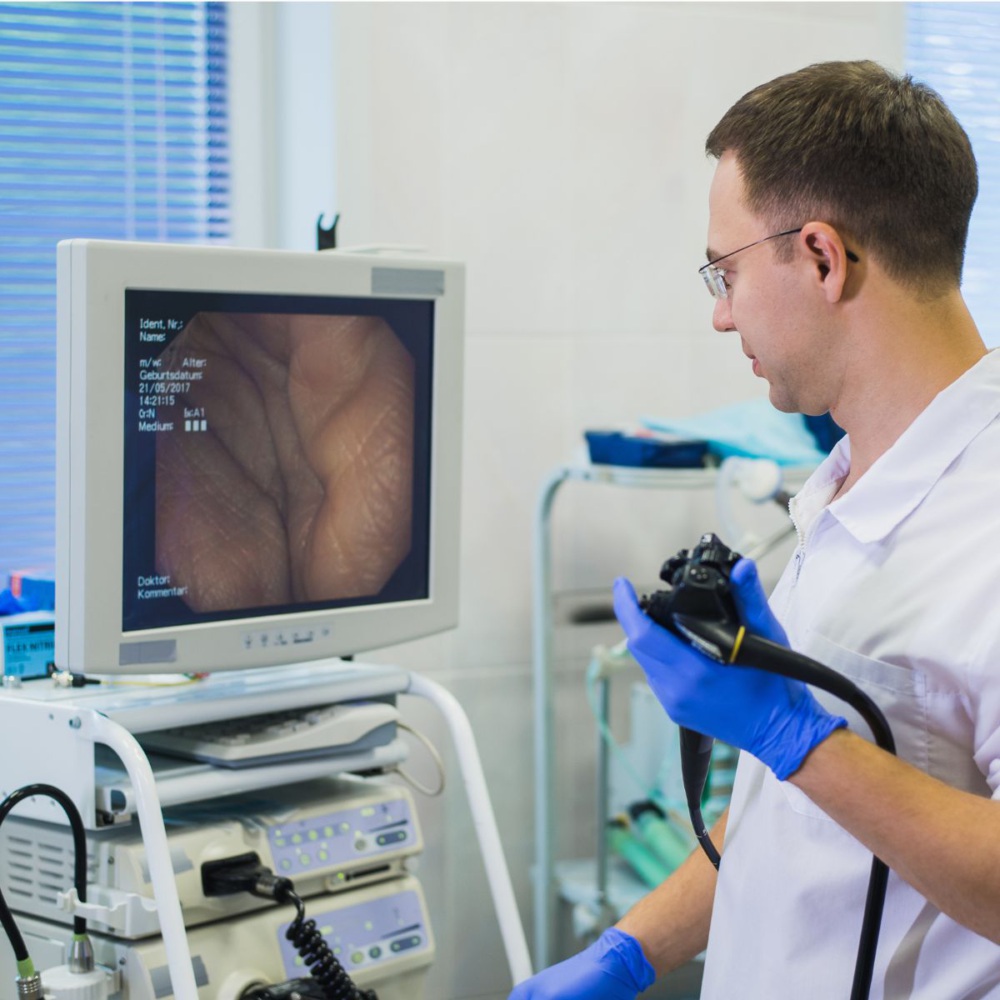
In this procedure, a tube with a light and a camera is inserted through the rectum into the colon to look for irregularities. With this procedure, your doctor can screen for cancer and find and remove precancerous polyps (growths), making it the only colorectal cancer screening type that is preventive. Before a colonoscopy, you would need to prepare by fasting for some time and drinking bowel preparation fluids or taking oral medication to clean out your colon. You are typically sedated during the procedure.
注意:如果您进行了任何其他检查并得到异常结果,您也必须进行结肠镜检查。
另请阅读 | You never forget your first time…getting a colonoscopy
Virtual colonoscopy: Every five years
Less invasive than a traditional colonoscopy, the virtual colonoscopy is a procedure where your doctor uses a CT-scan to examine the colon for abnormalities. It does require similar bowel prep to the colonoscopy, but no tubes are used and sedation is not required.
Flexible sigmoidoscopy: Every five years
With this procedure your doctor examines only the lower third of the colon (instead of the entirety, as with a colonoscopy). The procedure involves a tube with a camera so the doctor can view the inside of the colon. You would be required to cleanse your bowels with prep ahead of time, similar to the colonoscopy.
粪便检查
High sensitivity guaiac based fecal occult blood test (HS gFOBT): Every year
With this test, a stool sample is sent to a lab to detect if there are microscopic amounts of blood in the stool. After getting a kit from a health care provider, you can take the test at home and mail your sample. This test doesn’t require any modifications to your diet.
Fecal immunochemical test (FIT): Every year
这项基于粪便的测试将送往实验室,以检测粪便中是否有血液。从医疗保健提供者处获得试剂盒后,您可以在家进行测试并邮寄结果。这项测试不需要对您的饮食进行任何调整。
Multitarget stool DNA (mt-sDNA) test: Every three years
This stool-based test detects whether there are DNA mutations present in cells in your stool. This test also includes the FIT to look for blood in the stool. You take the test at home and mail your results to the lab.
Multi-target stool RNA (mt-sRNA) test: Every three years
This stool-based test detects whether there are RNA mutations present in cells in your stool. This test also includes the FIT to look for blood in the stool. You take the test at home and mail your results to the lab.
Blood-based tests
Blood test: Every three years
The blood-based test is recommended only for those who have declined or have not completed a visual or stool-based screening test. It requires having your blood drawn at a doctor’s office or lab. The blood sample is checked for DNA that could signal cancer.
For more information on colorectal cancer signs, symptoms and screening options, visit Preventcancer.org/colorectal.