肺癌

它是什么?

肺癌是始于肺部的癌症(几乎所有人出生时都有两个肺)。任何人都可能患肺癌,但某些因素会增加患癌风险。约 80%-90% 的肺癌死亡与吸烟有关。

Screening people who have a long history of smoking cigarettes significantly reduces lung cancer deaths, but despite being a non-invasive and quick procedure, current rates in the U.S. are just over 18% for those eligible*—the lowest of any routine cancer screening.

*来源:美国肺脏协会

Three senior women smiling in an outdoor pool. All three are resting their arms on the pool ledge and have goggles resting on the top of their heads.

接受筛查

If you smoke cigarettes or used to smoke cigarettes, follow these screening guidelines.*

*Source: American Cancer Society

50-80 岁:低剂量 CT 扫描

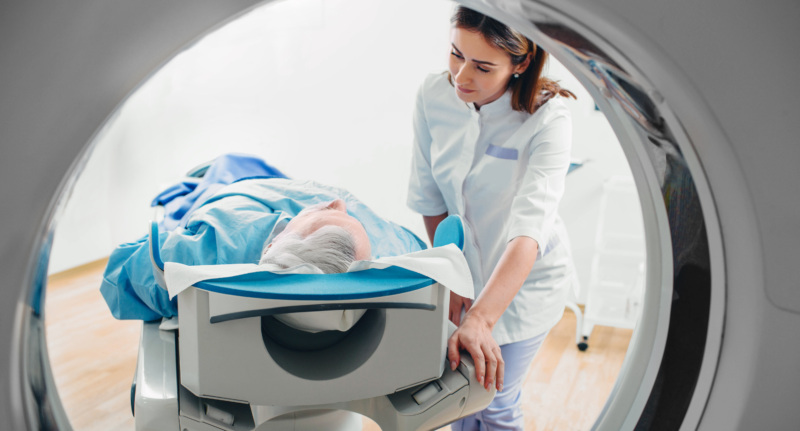
People who smoke cigarettes or used to smoke cigarettes may qualify for screening with a low-dose CT scan, an easy and painless screening procedure. Screening is recommended for those who have at least 20 pack-year histories of smoking cigarettes.

Low-dose CT scans are fast (taking less than a minute) and utilize up to 90% less radiation than traditional CT scans.

什么是包年历史?

“包年历史”是对一个人在一段时间内吸烟量的估计。将每天吸烟的包数乘以吸烟的年数。

每天一包,二十年就是二十包年。每天两包,十年也是二十包年。 详细了解包年如何影响您的健康.

保险范围

Under federal law, private insurers and Medicaid are required to cover services that have an “A” or “B” grade by the U.S. Preventive Services Task Force (USPSTF). Some insurers may choose to cover services for additional groups. Medicare coverage for preventive services is limited to tests for which Congress has explicitely authorized coverage.

Guidelines from the USPSTF recommend lung cancer screening for people ages 50-80 with 20 pack-year histories, who currently smoke cigarettes or who have quit within the past 15 years. American Cancer Society guidelines say it doesn’t matter when you quit.

Always check with your insurance provider to find out if you’ll be covered for routine lung cancer screening.

其他类型的吸烟

肺癌筛查的资格取决于吸烟情况。如果您长期吸烟,如雪茄,请与您的医疗保健提供者讨论肺癌筛查。如果建议您进行筛查,您可能需要咨询您的保险提供商,看看是否可以承保。

Find a lung cancer screening near you

Screening is recommended based on age and cigarette smoking history. Use this tool to find a lung cancer screening location near you today.

开始使用

了解您的风险

如果您符合以下情况,则罹患肺癌的风险较高:

  • Smoke or have a history of smoking—even if you quit a long time ago.
  • 严重接触二手烟。
  • 暴露于室内或室外空气污染中。
  • 曾经从事过接触辐射的工作。
  • 接触某些有毒物质,例如砷、氡或石棉。
  • 有肺癌个人病史或家族病史。

降低风险

您可以通过以下与生活方式相关的改变来降低患肺癌的风险:

Icon illustration of a cigarette with smoke coming from its tip and a large X over it indicating no smoking.

Avoid all forms of tobacco.

Icon illustration of a magnifying glass.

If you smoke cigarettes or used to, get screened for lung cancer based on guidelines and your personal risk factors.

Icon illustration of an adult head breathing in smoke from someone else's cigarette with a large X over the situation. It is indicating not to breathe in second-hand smoke.

远离二手烟。

An icon illustration of an apple and a carrot.

多吃水果和蔬菜。

The antioxidants in fruits and vegetables can help prevent DNA damage, and the phytochemicals and fiber have properties that can stop or slow the growth of cancer cells.

Icon illustration of a bottle of vitamins.

Consult with your health care provider before taking any supplements.

Beta-carotene, lutein, vitamin A, and vitamin B6 and B12 supplements may increase your risk of lung cancer.

Icon illustration of a house.

让您的家和社区无烟。

Icon illustration of a radon detector.

检测家里的氡气。

体征和症状

There are usually no symptoms in the early stages of lung cancer. Talk with your health care provider right away if you have any of these symptoms, even if you have none of the risk factors listed:

  • 咳嗽持续不缓解或加重
  • 咳血
  • Constant or intermittent, unexplained chest pain
  • 反复肺炎或支气管炎
  • 体重减轻和食欲不振
  • 声音嘶哑持续很长时间
  • 喘息或呼吸短促
  • 一直感觉很累

治疗方案

治疗取决于肿瘤细胞的类型(小细胞或非小细胞)、癌症的阶段、某些蛋白质或基因突变的存在或不存在以及您的病情。

外科手术

在肺癌早期阶段,当癌症尚未扩散到肺部以外时,手术是常规治疗方法。早期肺癌最常见的手术类型是肺叶切除术(切除一个肺叶)。对于已扩散到整个肺部的癌症,可以进行全肺切除术(切除整个肺部)。

化疗

化疗使用药物杀死癌细胞。它可以单独使用,也可以在手术前或手术后与其他疗法结合使用。

放射治疗

这种治疗方法使用高剂量的辐射杀死癌细胞并缩小肿瘤。它可以单独使用,也可以在手术前或手术后与其他疗法结合使用。

免疫疗法

This type of cancer treatment stimulates your immune system to better respond to the cancer to detect and destroy abnormal cells. It may be used alone or in combination with another therapy before or after surgery.

靶向治疗

Patients with certain tumor characteristics or genetic mutations may be eligible for targeted therapy. Targeted therapy can be a drug or antibody that targets the proteins or genetic mutations that affect how cancer cells grow, divide and spread. It may be used alone or in combination before or after surgery.

最新的

查看更多