Radon is the second leading cause of lung cancer. 8 in 10 US adults have never tested their home for it

Avoid tobacco products. Eat a healthy diet. Get recommended cancer screenings. Most U.S. adults recognize these behaviors as ways to lower their cancer risk or catch cancer early. Decades of public health campaigns have reinforced the connection between smoking and lung cancer, helping people understand that their choices can influence their health.
But U.S. adults are far less likely to recognize a risk factor they can’t control through daily habits. Radon—an odorless, invisible gas that forms naturally in the ground—is the second leading cause از سرطان ریه، but new research from the بنیاد پیشگیری از سرطان finds that 8 in 10 U.S. adults have never tested their home for radon. The findings are based on the Foundation’s annual Early Detection Survey of more than 7,000 U.S. adults, conducted in January 2026.
With recent high-profile lung cancer cases, such as the October diagnosis of Pope Leo XIV, who is not known to have a history of smoking cigarettes, more people are paying attention to other risk factors for lung cancer, especially for people who have never smoked.
Testing for radon is last on the list
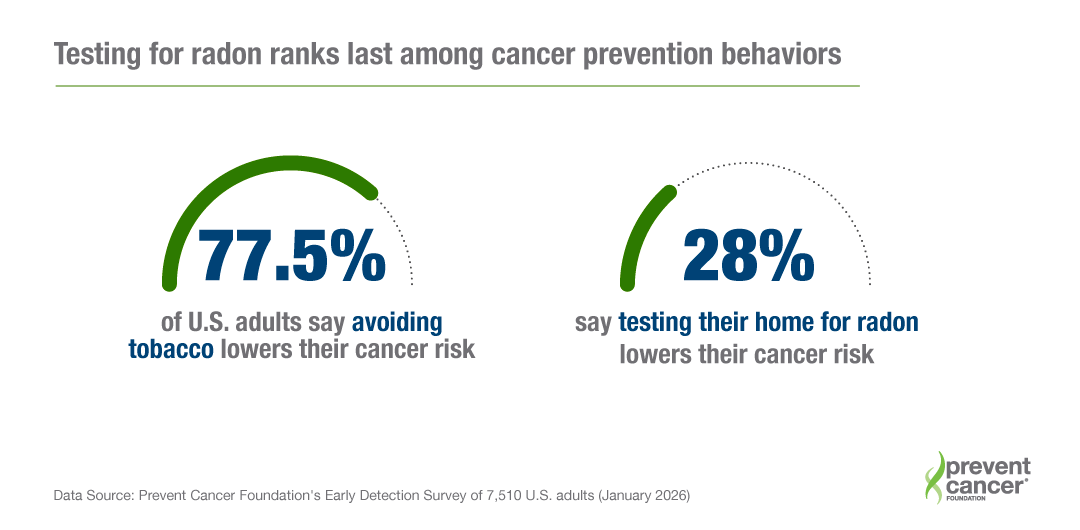
When asked about preventive behaviors, 77.5% say avoiding tobacco lowers their cancer risk. Three out of four say eating a healthy diet and getting routine cancer screenings make a difference, too. More than half also named regular exercise, limiting alcohol and protecting themselves from harmful UV rays.
Testing their home for radon ranked last on the list of preventive behaviors, with only 28% listing it as a way to reduce their cancer risk.
Most homes go untested in every region
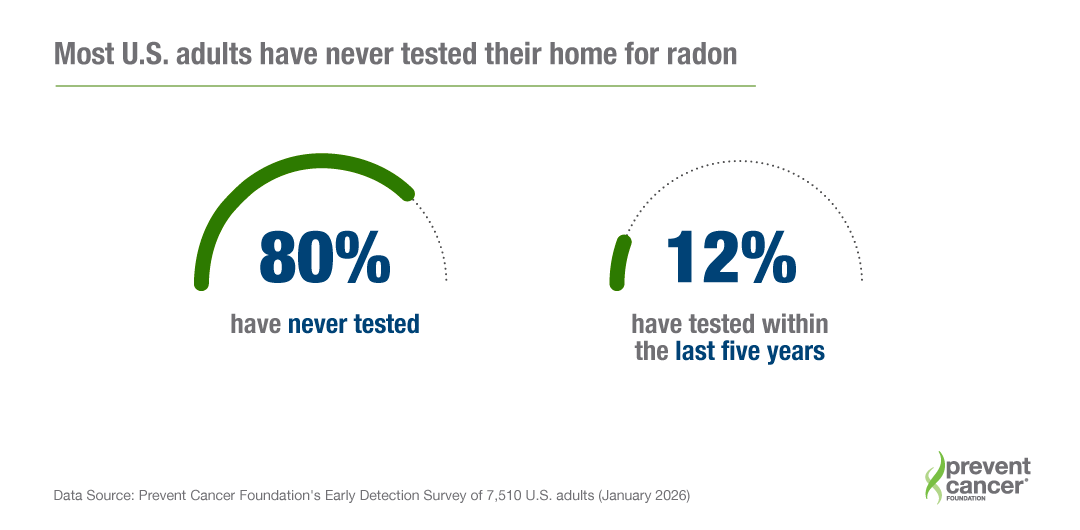
Radon hasn’t reached the same level of public awareness as tobacco use, diet and exercise. U.S. adults appear to overlook an environmental risk that could be inside their own homes. Eighty percent of U.S. adults report never having their homes tested for radon, and only 12% have tested within the last five years. The U.S. Environmental Protection Agency (EPA) recommends testing every two years.
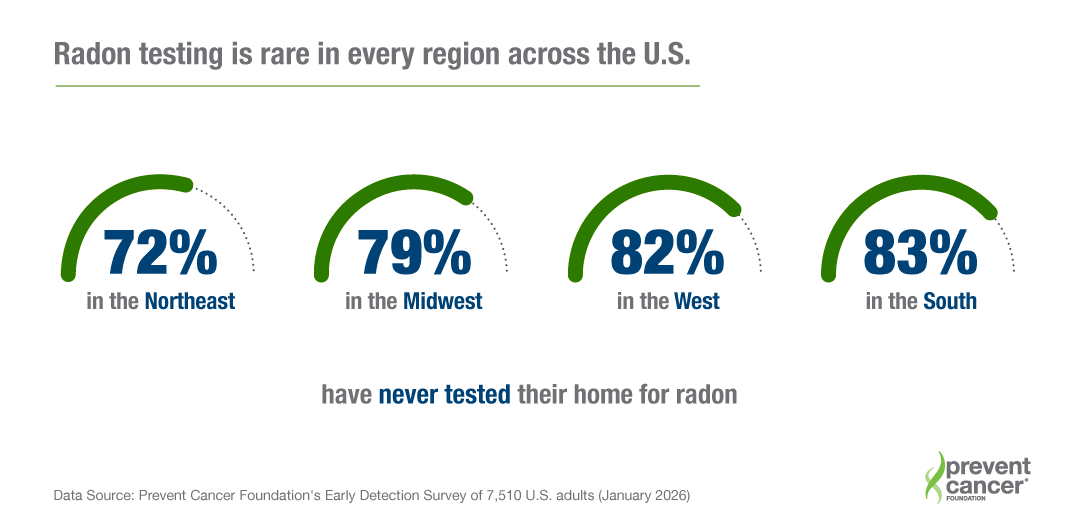
In the Northeast, about 7 in 10 people (72%) have never tested their home for radon. That percentage increases for the Midwest (79%), West (82%) and South (83%). Unlike cigarettes, radon does not produce smoke and is odorless, so a test is the only way to detect its presence.
What it takes to find out
Radon can enter homes through the ground when uranium underneath decays. Once it’s inside, it gets trapped. People can live with high radon levels without knowing it, in older homes and new construction alike. Breaking ground on undisturbed land during construction can release more radon.
Renters can either test themselves or ask their landlord whether the home has been tested and request the results. Landlord requirements vary by state.
Test kits are inexpensive and available online and at home improvement stores. The EPA recommends taking action to reduce radon levels at 4 picocuries per liter (pCi/L) or higher, and notes that levels below that may still carry risk. If levels are high, a mitigation system can bring them down.
Beyond radon, the EPA and other health authorities cite avoiding tobacco and secondhand smoke as the most significant steps people can take to lower lung cancer risk, along with following screening guidelines based on personal risk factors.
Methodology
The Prevent Cancer Foundation commissioned Atomik Research to conduct the Foundation’s fourth annual Early Detection Survey of U.S. adults. The study consists of an online survey questionnaire, which includes several repeated measures from a previous year’s questionnaire and a primary data set gathered from a sample of 7,510 adults located throughout the United States. The sample consists of adults 21 years of age or older, and researchers implemented several demographic-based quotas in order to achieve sample characteristics similar to the overall U.S. population of adults 21 and older.
Researchers controlled for demographic variables such as biological sex, age group classification, race/ethnicity, parental status, geographic region, employment status and community classifications (e.g., urban or rural classification).
The margin of error of the overall sample is +/-1 percentage point with a confidence level of 95%. Fieldwork took place between Jan. 10 and Jan. 30, 2026. Atomik Research is an independent market research agency.
Percentages may not add up to 100% due to computer rounding, and/or the acceptance of multiple responses.
This story was produced by بنیاد پیشگیری از سرطان and reviewed and distributed by Stacker.