Advancing access to lung cancer care through artificial intelligence innovation
This post has been sponsored by Bristol Myers Squibb as part of its sponsorship of the 2026 Prevent Cancer Gala.
Can AI help close care gaps in lung cancer?
Lung cancer remains the leading cause of cancer death in the United States, with the अमेरिकन कैंसर सोसायटी projecting about 229,000 new diagnoses and 125,000 deaths in 2026 alone. Behind those numbers lies another part of the story: Medically underserved communities, including many rural areas, experience higher mortality rates for lung cancer and are also less likely to undergo routine screening or biomarker testing.
At Bristol Myers Squibb (BMS), we believe artificial intelligence (AI) can help identify and quantify these health care gaps, accelerate individual diagnosis, detect disparities in treatment pathways, predict risk of outcomes and proactively target interventions. Two ongoing collaborations help demonstrate this approach.
Catching cancer earlier
BMS shares the Prevent Cancer Foundation’s goal to increase awareness about the importance of lung cancer screening to enable earlier detection and better outcomes. However, lung cancer nodules can be small and easily overlooked, and they are sometimes found by chance on imaging done for unrelated reasons. Even when a nodule is spotted, more than half of these patients don’t receive proper follow-up care and may never actually see a specialist.
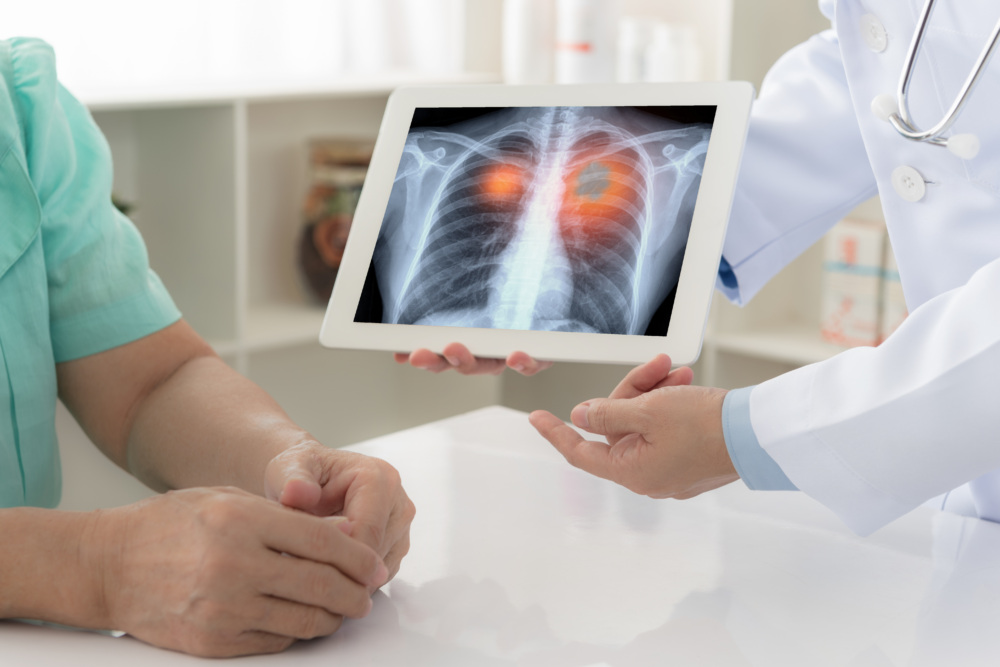
These challenges present an opportunity for improvement that BMS is tackling through our collaboration with Microsoft. Using AI algorithms that are cleared by the U.S. Food and Drug Administration (FDA), and deployed through Microsoft’s extensive Precision Imaging Network, will help radiologists analyze X-ray and CT images to flag hard-to-detect nodules. Then, workflow tracking tools will help ensure patients flagged with nodules are connected to care rather than fall through the cracks. This multi-year collaboration is currently in its first phase, recruiting pilot sites such as rural hospitals and community clinics.
Supporting better treatment decisions after diagnosis
A second opportunity begins after diagnosis. For patients with advanced non-small cell lung cancer (the most common form of lung cancer), selecting the most effective therapy depends on biomarker testing. These lab analyses identify specific genetic mutations driving a patient’s cancer. But biomarker testing doesn’t always happen as guidelines recommend, in part because lab and electronic health record systems are often disconnected.
Through our collaboration with Tempus AI, BMS implemented the AI-enabled Tempus Next Pathways program across 13 community-based health systems to build a near real-time view of the patient journey, finding out where and why patients were not receiving the right care according to guidelines.
The results were compelling. By providing these insights to clinical teams, guideline-directed biomarker testing rates rose from 73% to 84% across participating sites. The program also helped explain the reasons behind that gap, such as clinical factors like disease progression or transitions to hospice care, or logistical issues like patients relocating out of their previous health system. This information provided better tools to design targeted interventions.
Two projects, one purpose
Together, these two projects present a picture of what AI-enabled, data-driven and access-focused cancer care can look like: identifying cancer earlier through smarter imaging workflows and enabling evidence-based treatment. For BMS, that combination reflects a broader commitment, one shared with organizations like the Prevent Cancer Foundation, to help innovation in cancer care reach every community.
बारे में और सीखो Advancing population health – Bristol Myers Squibb