Cáncer de pulmón

¿Qué es?

El cáncer de pulmón es un cáncer que comienza en el pulmón (casi todas las personas nacen con dos pulmones). Cualquiera puede padecer cáncer de pulmón, pero algunos factores aumentan el riesgo. Alrededor del 80%-90% de las muertes por cáncer de pulmón están relacionadas con el tabaquismo.

Screening people who have a long history of smoking cigarettes significantly reduces lung cancer deaths, but despite being a non-invasive and quick procedure, current rates in the U.S. are just over 18% for those eligible*—the lowest of any routine cancer screening.

Detección temprana = mejores resultados®, so it’s important to get screened, reduce your risk, and talk with your health care provider about your health history.

*Fuente: Asociación Estadounidense del Pulmón

Three senior women smiling in an outdoor pool. All three are resting their arms on the pool ledge and have goggles resting on the top of their heads.

Hágase la prueba

If you smoke cigarettes or used to smoke cigarettes, follow these screening guidelines.*

*Source: American Cancer Society

Entre 50 y 80 años: tomografía computarizada de dosis baja

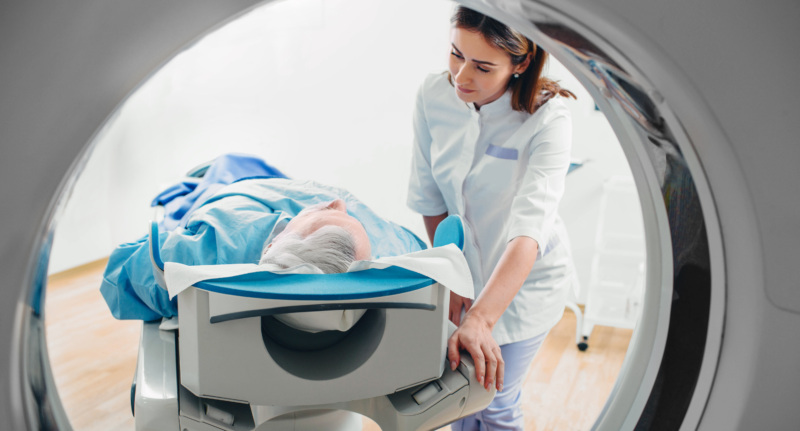
People who smoke cigarettes or used to smoke cigarettes may qualify for screening with a low-dose CT scan, an easy and painless screening procedure. Screening is recommended for those who have at least 20 pack-year histories of smoking cigarettes.

Low-dose CT scans are fast (taking less than a minute) and utilize up to 90% less radiation than traditional CT scans.

¿Qué es el historial de un año de paquete?

Un “historial de paquete-año” es una estimación de cuánto ha fumado una persona a lo largo del tiempo. Multiplica el número de cajetillas de cigarrillos que fumas cada día por el número de años fumando esa cantidad.

Un paquete al día durante 20 años equivale a 20 paquetes al año. Dos paquetes al día durante 10 años también equivalen a 20 paquetes por año. Obtenga más información sobre cómo los años del paquete influyen en su salud.

Cobertura del seguro

Under federal law, private insurers and Medicaid are required to cover services that have an “A” or “B” grade by the U.S. Preventive Services Task Force (USPSTF). Some insurers may choose to cover services for additional groups. Medicare coverage for preventive services is limited to tests for which Congress has explicitely authorized coverage.

Guidelines from the USPSTF recommend lung cancer screening for people ages 50-80 with 20 pack-year histories, who currently smoke cigarettes or who have quit within the past 15 years. American Cancer Society guidelines say it doesn’t matter when you quit.

Always check with your insurance provider to find out if you’ll be covered for routine lung cancer screening.

Otros tipos de fumar

La elegibilidad para la detección del cáncer de pulmón se basa en el tabaquismo. Si tiene un largo historial de fumar otra cosa, como cigarros, hable con su proveedor de atención médica sobre la detección del cáncer de pulmón. Si se le recomienda una prueba de detección, es posible que desee consultar con su proveedor de seguro para ver si estará cubierta.

Find a lung cancer screening near you

Screening is recommended based on age and cigarette smoking history. Use this tool to find a lung cancer screening location near you today.

Empezar

Conozca su riesgo

Usted tiene un mayor riesgo de sufrir cáncer de pulmón si:

  • Smoke or have a history of smoking—even if you quit a long time ago.
  • Ha tenido una fuerte exposición al humo de segunda mano.
  • Estuvieron expuestos a la contaminación del aire interior o exterior.
  • Haber tenido un trabajo con exposición a la radiación.
  • Estuvieron expuestos a determinadas sustancias tóxicas, como el arsénico, el radón o el amianto.
  • Tener antecedentes personales o familiares de cáncer de pulmón.

Reduzca su riesgo

Puede reducir su riesgo de cáncer de pulmón mediante estas modificaciones relacionadas con el estilo de vida:

Icon illustration of a cigarette with smoke coming from its tip and a large X over it indicating no smoking.

Avoid all forms of tobacco.

Icon illustration of a magnifying glass.

If you smoke cigarettes or used to, get screened for lung cancer based on guidelines and your personal risk factors.

Icon illustration of an adult head breathing in smoke from someone else's cigarette with a large X over the situation. It is indicating not to breathe in second-hand smoke.

Manténgase alejado del humo de segunda mano.

An icon illustration of an apple and a carrot.

Come muchas frutas y verduras.

The antioxidants in fruits and vegetables can help prevent DNA damage, and the phytochemicals and fiber have properties that can stop or slow the growth of cancer cells.

Icon illustration of a bottle of vitamins.

Consult with your health care provider before taking any supplements.

Beta-carotene, lutein, vitamin A, and vitamin B6 and B12 supplements may increase the risk of lung cancer.

Icon illustration of a house.

Haga que su hogar y su comunidad estén libres de humo.

Icon illustration of a radon detector.

Haga una prueba de radón en su casa.

Signos y síntomas

There are usually no symptoms in the early stages of lung cancer. Talk with your health care provider right away if you have any of these symptoms, even if you have none of the risk factors listed:

  • Una tos que no desaparece o empeora.
  • Tosiendo sangre
  • Constant or intermittent and unexplained chest pain
  • Neumonía o bronquitis repetidas.
  • Pérdida de peso y pérdida de apetito.
  • Ronquera que dura mucho tiempo.
  • Sibilancias o dificultad para respirar
  • Sentirse muy cansado todo el tiempo.

Opciones de tratamiento

El tratamiento depende del tipo de células tumorales (células pequeñas o no pequeñas), el estadio del cáncer, la presencia o ausencia de ciertas proteínas o mutaciones genéticas y su condición médica.

Cirugía

En las primeras etapas del cáncer de pulmón, cuando la enfermedad no se ha extendido fuera de los pulmones, la cirugía es el tratamiento habitual. El tipo de cirugía más común para el cáncer de pulmón en etapa temprana es la lobectomía (extirpación de un lóbulo del pulmón). Se podría realizar una neumonectomía (extirpación de todo el pulmón) para el cáncer que se ha diseminado por todo el pulmón.

Quimioterapia

La quimioterapia utiliza medicamentos para matar las células cancerosas. Puede usarse solo o en combinación con otra terapia antes o después de la cirugía.

Radioterapia

Este tratamiento utiliza altas dosis de radiación para matar las células cancerosas y reducir los tumores. Puede usarse solo o en combinación con otra terapia antes o después de la cirugía.

Inmunoterapia

This type of cancer treatment stimulates your immune system to better respond to the cancer to detect and destroy abnormal cells. It may be used alone or in combination with another therapy before or after surgery.

Terapia dirigida

Patients with certain tumor characteristics or genetic mutations may be eligible for targeted therapy. Targeted therapy can be a drug or antibody that targets the proteins or genetic mutations that affect how cancer cells grow, divide and spread. It may be used alone or in combination before or after surgery.

Lo último

Ver más