From mother to daughter: the power of knowing your risk
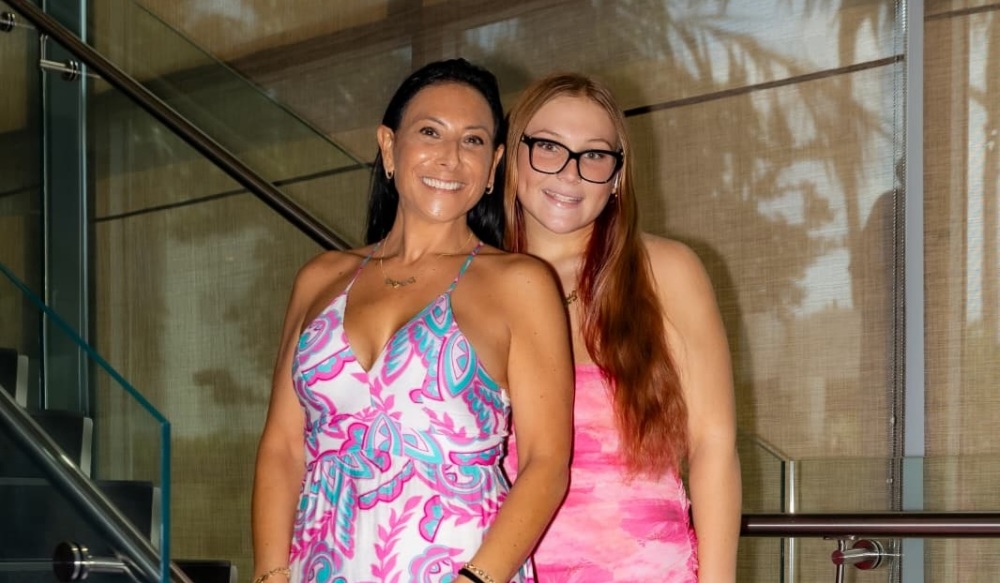
There are moments in life that change everything. For me, that moment happened when I was just 18 years old.
Like many young women, I had no reason to believe breast cancer would become such a defining part of my life. One day, while performing a self-breast exam in the shower, I felt something that didn’t seem right. That one moment led to my first lumpectomy, a surgery to remove abnormal tissue from and around the breast. Then another. And another.
Because of my family history, my doctor referred me to a breast surgeon for a lumpectomy. By the age of 21, I had undergone three of them. Thankfully, every biopsy came back benign (not cancerous), but my story wasn’t over.
My doctors also recommended genetic testing. At the time, it felt radical, and there wasn’t the same level of discussion or education surrounding hereditary cancer as there is today.
LEER TAMBIÉN | The journey of Tracy Milgram: From previvor to founder of BRCAStrong
When my results came back positive for the BRCA2 genetic mutation, my world changed.
I learned that I faced up to an 87% lifetime risk of breast cancer and a 67% lifetime risk of ovarian cancer. Those numbers weren’t just statistics—they represented my future if I chose to do nothing.
People often ask if deciding to undergo genetic testing was difficult. For me, the answer is no. The difficult part wasn’t taking the test. The difficult part was deciding what to do with the information afterward. But the knowledge gave me options, time and opportunity to make informed decisions before cancer made them for me.
Over the years, I chose preventive surgeries, including a prophylactic mastectomy, a surgery that can help reduce the risk of breast cancer by removing one or both breasts before disease develops, and a hysterectomy, or surgery to remove the uterus. These decisions weren’t as easy. They came with physical recovery, emotional healing and countless moments of questioning whether I was doing the right thing. But they also came with good news: I reduced my lifetime risk for breast cancer from 87% to 2% and reduced my lifetime risk for ovarian cancer from 67% to zero.
Today, more than two decades after learning I carry the BRCA2 mutation, I can honestly say I have never regretted choosing knowledge.
That knowledge is the reason BRCAStrong exists. It is why, for more than 11 years, we’ve educated, advocated and supported people before, during and after their cancer journeys—regardless of genetic predisposition.
But today, this journey has taken on a new meaning. Because now I’m not just thinking about myself. I’m thinking about my daughter, too.
Gabriela’s story
Growing up, hereditary cancer wasn’t something that was hidden in our family. It was part of everyday conversations.
I’ve watched my mom go through surgeries, doctor’s appointments, and recoveries to deal with her own cancer risk, as well as countless advocacy meetings and conversations to help others understand hereditary cancer and their risk. I’ve also watched her choose prevention over fear.
I have a 50% chance of inheriting the same BRCA2 mutation as my mom, but it’s never been something we’ve avoided talking about. In fact, for years I’ve said that when I turn 18, I want to have genetic testing done. Suddenly, that year is right around the corner as I approach my 18th birthday next April.
Not because I’m scared. But because I want to know.
Recently, during a visit with my gynecologist, the topic came up. My OB-GYN casually suggested I could always use an at-home test.
I laughed.
My response was immediate.
“No way. Do you know who my mom is?”
We both laughed, but the truth behind that moment was important.
I’ve grown up understanding that despite the ease of some direct-to-consumer ancestry tests, they are not the same as comprehensive medical genetic testing. When it comes to hereditary cancer, accuracy, proper counseling, and understanding what your results actually mean matter. It’s always a good idea to meet with a genetic counselor following testing—whether your test identifies a genetic mutation or not.
If I’m going to learn whether I carry the BRCA2 mutation, I want to do it the right way with medical-grade testing and guidance from genetics professionals who can help me understand every step of the process.
That knowledge has been one of the greatest gifts my mom has given me.
Why we share our story
There is still so much fear surrounding genetic testing. Some people are afraid to know. Others worry about what the results might mean. Some believe that if they don’t test, somehow the risk doesn’t exist.
But for those who choose to get genetic testing done, remember that knowing your risk doesn’t create your risk, it reveals it. And once you know, you have choices:
- You can increase screening.
- You can work with specialists.
- You can consider medications.
- You can make lifestyle changes.
- You can discuss preventive options when and if the time is right.
Or sometimes, the greatest gift is learning that you did no inherit the mutation.
Every person’s journey is different, but you deserve the opportunity to make your own, informed decision.
A legacy of empowerment
When I founded BRCAStrong, my hope was to build a community where no one would have to face hereditary cancer alone.
Today, watching Gabriela prepare to make her own decisions reminds me why this work matters more than ever.
This isn’t about creating fear for the next generation.
It’s about creating confidence—through education, science and community.
Whether Gabriela tests positive or negative, one thing will never change: knowing her risk gives her the power to make informed decisions and take charge of her health.
If you have a personal or family history of breast, ovarian, prostate, pancreatic or other hereditary cancers, talk with your health care provider or a certified genetic counselor to determine whether genetic testing is right for you. The information you learn today could change your future—and your family’s—for generations to come.