The HPV vaccine for kids: Everything parents need to know
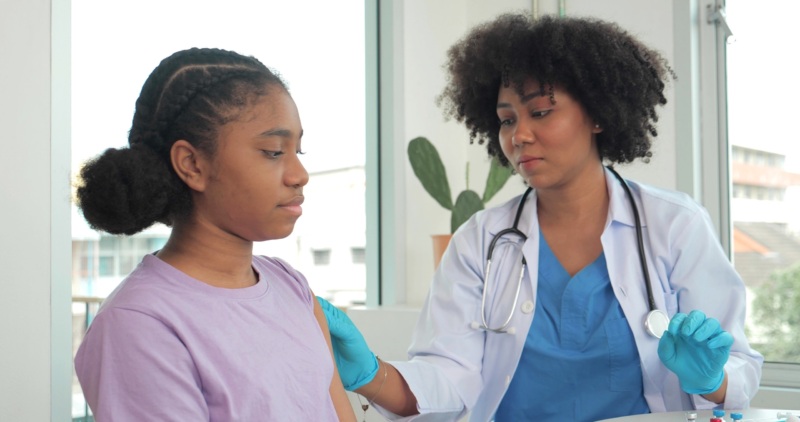
This article was originally published on Successful Black Parenting as a partnership with the Prevent Cancer Foundation.
We do a lot to protect our kids. We have The Talk about how to stay safe when the world doesn’t always see their greatness. We tell them how to protect themselves at school, how to manage being bullied, and how to keep their heads high no matter what.
We do all that to keep them safe on the outside, but what about protecting them on the inside with the VPH vaccine?
Hear me out before you scroll past this. I know the minute some of us hear the word vaccine, we tense up. I understand the fear and mistrust many of us may still feel toward the medical system. But this? This isn’t that. The Vaccin contre le VPH has been safely used for nearly 20 years in the U.S., with millions of doses given, and it’s proven to protect children from several HPV-related cancers later in life. Knowing the facts helps us to move past old fears and make informed choices that keep our families healthy.
What Is HPV?
HPV stands for human papillomavirus, and it’s one of the most common sexually transmitted viruses in the world. Almost everyone will come into contact with it at some point in their life. You can’t see it, and most people don’t even know they have it because it often doesn’t cause any symptoms. In many cases, the body clears the virus on its own. But sometimes it doesn’t, and that’s when HPV can lead to problems like cervical, anal, penile, vaginal, vulvar, or throat cancers.
You can learn more about how HPV spreads and the cancers it can cause from the Prevent Cancer Foundation® and the Centres de contrôle et de prévention des maladies (CDC).
The HPV Vaccine: Cancer Prevention in a Shot
Here’s what makes the HPV vaccine so powerful: it can prevent more than 90% of HPV-related cancers. Think about that. If there is a shot that can keep your child from getting cancer as an adult, you’d at least want to know more about it, right?
The vaccine protects both boys and girls. It’s not just for girls, even though that’s what many of us heard in the past. Boys can get HPV, too, and it can cause cancers that affect them as adults. Protecting both girls and boys is how we protect our families’ futures.
Doctors recommend getting the HPV vaccine between the ages of nine and 12, when children’s immune systems respond best and before they are ever exposed to the virus. If your child is older, it’s not too late. Teens and young adults up to age 26 can still get vaccinated, according to the CDC. Usually, it’s just two shots, spaced six to 12 months apart. If your child starts later, they may need three. When the HPV vaccine is given as recommended, it can prevent more than 90 percent of HPV-related cancers, giving kids powerful protection as they grow.
Is It Safe?
Yes. The HPV vaccine has been used safely for nearly 20 years. Over 100 million doses have been given in the United States, and it continues to have one of the “strongest safety records” of any vaccine. That information comes straight from the CDC’s Vaccine Safety page.
Like other childhood vaccines, the most common side effects of the HPV vaccine are mild, such as soreness at the injection site, tiredness, or a low-grade fever that resolves in a day or two. Since the vaccine was first introduced, HPV infections and related precancers have dropped dramatically, proving it works.
When to Talk to Your Child’s Doctor
If your child is between nine and 12, this is the perfect time to bring it up at their next checkup. You can simply say, “Is my child due for the HPV vaccine?” Most doctors give it along with other routine shots. Check the Prevent Cancer Foundation’s Guide to Children’s Vaccinations for more information.
If your teen is older, ask if they’ve already received it. Even if they started but didn’t finish, it’s okay. They can pick up where they left off. The goal is to complete the full series for lasting protection.
If life gets busy (and it always does), set a reminder on your phone for the follow-up dose. We track hair appointments and sports practices, so we can track this, too.
Understanding Our Hesitation, Healing with Facts
I get it. Our community has a complicated history with medicine, and that mistrust didn’t just appear. From the Tuskegee Experiment to ongoing biases in healthcare, we have valid reasons to question the system.
But the HPV vaccine isn’t part of that story. It was created to protect all children, not exploit them. It’s been reviewed by independent scientists, including Black doctors, and approved by trusted organizations like the Prevent Cancer Foundation and the CDC.
This vaccine is about prevention, not control. It’s about giving our kids a stronger, healthier future.
Why This Matters for Black Families
According to a report,Black and Hispanic women are more likely to be diagnosed with cervical cancer and more likely to die from it than white women. That’s not because we don’t care about our health. It’s due to barriers to care, limited information, and lower vaccination rates in our community.
By vaccinating our daughters and sons early, we can help close that gap. We can rewrite the future and protect the next generation. This is what health equity looks like in real life – parents making informed choices to stop preventable diseases before they even start.
Trusted Resources for Parents
If you want to dig deeper, here are a few good places to start:
You can also contact your local health department or a neighborhood clinic to find a vaccination site near you.
The Bottom Line
We already do so much to keep our kids safe. We pray over them before school, make sure they’re home before dark, and teach them how to move in a world that doesn’t always make room for them. Protecting their health is just another way we show our love. As parents, it’s our primary job to keep our children safe.
Share reliable information from trusted sources like preventcancer.org or the CDC.
This is an essential milestone in our children’s lives to give them a lifetime of protection from HPV. The HPV vaccine is one of the few ways we can help prevent several cancers down the road. It’s safe, it’s proven, and it works.
So from one parent to another, don’t wait. Talk to your child’s doctor. Ask questions. Get the facts. Protect your babies. Because this is how we make sure our kids grow up healthy, strong, and ready to live out their dreams.
Protecting their health is just another way we show our love. As parents, it’s our primary job to keep our children safe. This is an essential milestone in our children’s lives to give them a lifetime of protection from HPV. The HPV vaccine is one of the few ways we can help prevent several cancers down the road. It’s safe, it’s proven, and it works.
Protect your babies. Because this is how we make sure our kids grow up healthy, strong, and ready to live out their dreams.
Questions fréquemment posées
Is the HPV vaccinereally safe?
Yes, it’s very safe. The HPV vaccine has been used for nearly 20 years, and millions of kids and adults have received it. The most common side effect is a sore arm for a day or two. That’s it. The HPV vaccine is one of the most closely monitored vaccines in the world.
Why do kids need it so young?
That’s a great question and one many parents ask. The vaccine works best when given before kids are ever exposed to HPV. It’s not about permission or early activity. It’s about protection before there’s any risk. Think of it like a seatbelt: you buckle it avant the car moves.
My child is older. Is it too late?
Not at all. The vaccine can still help protect teens and young adults up to age 26. If they start later, they’ll just need an extra dose. So don’t count it out. Talk to your child’s doctor or remind your older children to ask their doctor and schedule it.
Is this just for girls?
Nope! Both boys and girls need it. HPV can cause several cancers that affect all genders, including throat and anal cancers, not just cervical cancer. Protecting our sons is just as important as protecting our daughters.
What if I don’t trust vaccines because of our history?
I completely understand that feeling. Our community has every reason to be cautious, given how we’ve been treated in the past. But this vaccine isn’t part of that story. It was created to prevent cancer, not cause harm. It’s been studied by doctors of all backgrounds, including Black doctors, and approved by every major health organization because it works.
Does my child still need checkups after getting the HPV vaccine?
Yes. The vaccine does its part by preventing most HPV-related cancers, but regular doctor visits and screenings are still needed. Think of it as layers of protection. The shot covers one side, the checkups cover the rest.
How can I make this less scary for my child?
Keep it simple. You can say, “This shot helps keep you healthy when you’re older.” Kids take their cues from us, so if you stay calm and confident, they’ll usually follow your lead. Some parents even plan something fun afterward, like ice cream or a movie, to make it a positive experience.
Where can I learn more?
You can visit the Fondation Prévenir le Cancer’s website or the CDC’s HPV page for parents. These are trusted, easy-to-read sources that explain everything clearly.
Disclaimer: This article is for educational purposes only and is not a substitute for professional medical advice. Always consult your child’s doctor or qualified healthcare provider about any medical concerns.